Author Archives: Melissa Beck

Melissa Beck's avatar

About Melissa Beck

My reading choices are rather eclectic. I enjoy reading a wide range of books especially classics, literature in translation, history, philosophy, travel writing and poetry. I especially like to support small, literary presses.

Review and Giveaway: Mademoiselle Chanel by C.W. Gortner

Today I welcome France Book Tours back to my blog with an interesting historical fiction novel about the iconic figure Coco Chanel.  I invite you to read my review and enter to win your own copy of the book.

My Review:

mademoiselle-chanelThere are certain names in the fashion industry that are synonymous with high end, quality and timeless clothing.  Chanel is one such name.  This historical fiction novel captures the struggle that this fierce women went through at a time when it was unheard of for any woman to work for a living and own her own business.

Coco Chanel grows up as an orphan after her mother dies and her father abandons their family. Forced to live in a convent that cares for and educates orphans, Coco is always striving to make her own place in the world and not depend on anyone.

Much of the book takes places in early 20th century Paris, where Coco works tirelessly to make a name for herself amongst men who dominate the fashion industry.  What I found fascinating about this book is that it is not only a personal history of Chanel, but also a history of fashion and the dramatic changes in women’s clothing between the 19th and 20th centuries.  No more are women required to wear tight-fitting corsets and their hair tied back in buns.  Coco is heavily influenced by men’s fashions and oftentimes raids the closets of her male lovers for fabrics and old clothes to rework and make suitable for women.

Coco Chanel is a person for whom we wish the greatest success.  Despite many setbacks throughout her career, she always picks herself back up and reinvents herself.  C.W. Gortner has done a spectacular job of bringing to life the fashion icon that is Coco Chanel.

About The Author:
CW GortnerC.W. Gortner is the international bestselling author of six historical novels, translated in over twenty-five languages to date. His new novel, “Mademoiselle Chanel”, traces the tumultuous rise to fame of iconic fashion designer, Coco Chanel. In 2016, Random House will publish his eighth novel, “Vatican Princess”, about Lucrezia Borgia. Raised in Spain and a long-time resident of the Bay Area, C.W. is also dedicated to companion animal rescue from overcrowded shelters.

Visit his website. Follow him on Facebook, Twitter

Subscribe to his newsletter

Giveaway:

You can enter the giveaway here or on the book blogs participating in this tour. Be sure to follow each participant on Twitter/Facebook, they are listed in the entry form below.

Entry-Form

Visit each blogger on the tour. Tweeting about the giveaway everyday of the Tour will give you 5 extra entries each time! (Just follow the directions on the entry-form.)

There will be a total of 6 winners. Five printed copies will be given away as well as one beautiful handcrafted beaded bracelet which is inspired by Coco’s black and white signature colors and camellia design (pictured below). This giveaway is open to US residents only.
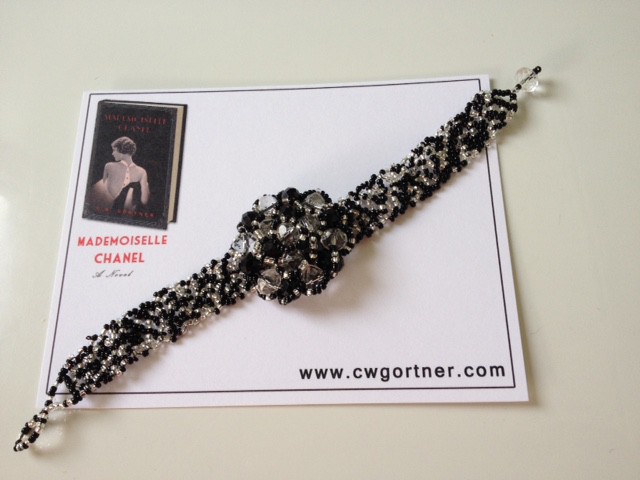
Mademoiselle Chanel bracelet
CLICK ON THE TOUR BANNER TO READ OTHER REVIEWS, EXCERPTS, GUEST-POSTS AND INTERVIEWS
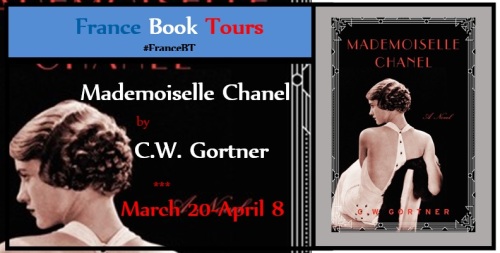
Mademoiselle Chanel banner

12 Comments

Filed under France, Historical Fiction

Review and Recipe: Every Last Crumb by Brittany Angell

I received an advanced review copy of this book from Victory Belt Publishing.

My Review:
Every Last CrumbEvery Last Crumb is a fantastic cookbook for those who are interested in the paleo/primal lifestyle but still want to indulge in a treat every once in a while and do some baking.  The book has a wide range of recipes, from those that are quick and easy recipes to those that require more experience with baking techniques.

One of my favorite things to indulge in on St. Patrick’s Day is Irish Soda Bread and I was looking for a grain free version of this bread.  I was so glad to receive Every Last Crumb and find a soda bread recipe among the chapter on “Specialty Breads.”  The bread was so delicious that I liked it better than the traditional soda breads one can buy at the grocery store.

Some of the other chapters in the book are dedicated to muffins, classics breads, biscuits and scones and even crackers.  The publisher is generously allowing me to share the recipe for the Gingerbread Scones so that my readers can enjoy a sampling of the delicious recipes that are included in the book.  I made the scones and they were relatively easy to make and were great warmed with a dab of grass-fed butter and paired with a good cup of tea.  I also like the variations of different toppings that can be used with this recipe.  If you make a batch, be sure to stop back and let me know what you think of the recipe!

Gingerbread Scones:
Ginger SconesPrep time: 15 minutes
Cook time: 38 to 40 minutes
Yields: 6 scones
Dairy free, Grain free, Coconut free
These delightfully fluffy and cakelike scones are absolutely perfect to make for breakfast or just a typical Sunday morning.

Ingredients:
288 grams blanched almond flour (about 2 cups)
88 grams potato starch or sweet potato starch (about ½ cup), plus more for the pan and dough
2 teaspoons ginger powder
2 teaspoons ground nutmeg
2 teaspoons ground allspice
½ teaspoon baking soda
Grated zest of 1 orange
112 grams (½ cup/1 stick) semi-chilled salted butter or 88 grams (½ cup plus 1 tablespoon) room-temperature Spectrum vegetable shortening
120 grams coconut palm sugar (about ¾ cup)
1 tablespoon molasses
¾ teaspoon orange juice or lemon juice
2 large eggs

Directions:
1. Preheat the oven to 350 degrees. Line a baking sheet with parchment paper and dust it with potato starch.
2. In a mixing bowl, whisk the almond flour, potato starch, ginger, nutmeg, allspice, and baking soda until blended.
3. Add the orange zest and stir to mix through.
4. Cut the butter into the flour mixture until small pea-sized clumps form.
5. In a separate small bowl, whisk together the sugar, molasses, orange juice and eggs.
6. Pour the wet ingredients into the flour-butter mixture and mix until well combined.
7. Shape the dough into a ball and place it on the prepared baking sheet. Pat out the dough into a circle, about 6 inches in diameter and 2 inches thick. Pat the top and sides with potato starch.
8. Bake for 38 to 40 minutes, until firm to the touch and golden brown. Cover with foil halfway through baking to prevent it from burning.
9. Allow to cool on the pan. When completely cool, slice into 6 wedges and serve. Store at room temperature in a sealed bag or container, or freeze for up to 3 months.

Variations:
Glazed Gingerbread Scones:
In a small bowl, mix together 1 cup powdered coconut palm sugar, 2 tablespoons water, and 1 teaspoon orange oil/extract or vanilla extract until well combined. Drizzle the glaze over the cooled and cut scones.

Crackle-Top Gingerbread Scones:
Sprinkle 1 tablespoon coconut palm sugar on the dough before baking. This will give the scones a molasses cookie−style crust.

For more recipes and information about the author visit her website: brittanyangell.com

Leave a comment

Filed under Cookbook, Paleo

Review and Giveaway: The Witch of Painted Sorrows by M.J. Rose

Today I welcome France Book Tours back to the blog with a unique historical fiction novel.  I invite you to read my reviews and enter to win a $20 gift card (open internationally).

My Review:
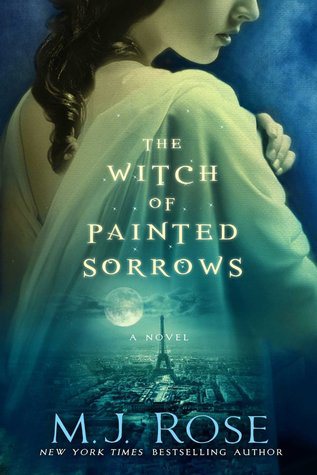
the-witch-of-painted-sorrows-coverThis novel appeals to a wide variety of interests because of the different genres it touches upon.  First, and foremost, The Witch of Painted Sorrows is an historical novel, as it is set in the late 19th Century in Belle Epoque Paris.  The sites and sounds of Paris are captured in great detail as Sandrine, the main character, describes her days spent in her grandmother’s luxurious apartments, in her family’s mysterious mansion, and in the famous museums of Paris.  Sandrine’s grandmother is also a famous courtesan and the author makes it a point to describe what, exactly, this job entails.

The Witch of Painted Sorrows is also a mystery and delves into the realm of fantasy.  Sandrine has always thought her grandmother and her grandmother’s home were very unusual.  In fact, her father’s mother is so strange, that Sadrine never tells her husband or anyone else of her grandmother’s existence.  Her grandmother seems to know about certain events before they even happen and she has a very strange fear of falling in love.  When Sadrine finds a mysterious room at the top of her grandmother’s mansion, she becomes more intent on finding out about her family’s history.

Finally, The Witch of Painted Sorrows has a touch of romance as Sandrine is escaping New York and fleeing to Paris in order to avoid an abusive husband.  When Sandrine settles down in Paris she meets a handsome young architect who shares her love of art.  But Sandrine has never really found love as an adult.  Will her grandmother’s warnings be enough to keep her away from this strong attraction, or will she give into her passion?

I don’t usually read books in the fantasy genre, but THE WITCH OF PAINTED SORROWS has just enough mystery mixed with historical fiction to make a interesting novel.
About The Author:
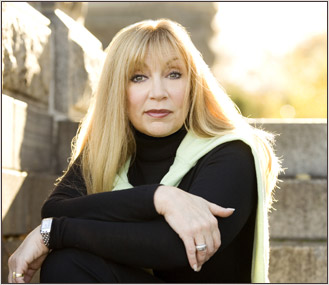
mj-roseNew York Times Bestseller, M.J. Rose grew up in New York City mostly in the labyrinthine galleries of the Metropolitan Museum, the dark tunnels and lush gardens of Central Park and reading her mother’s favorite books before she was allowed. She believes mystery and magic are all around us but we are too often too busy to notice…books that exaggerate mystery and magic draw attention to it and remind us to look for it and revel in it.
Please visit her website, her blog: Museum of Mysteries
 

Giveaway:
The publisher is picking 5 winners to receive a $20 Gift Card. Click on the link below for full details and to enter:

CLICK ON THE BANNER TO SEE ALL OF THE STOPS ON THE TOUR:

The Witch of Painted Sorrows banner


11 Comments

Filed under Uncategorized

What Makes for a Successful Short Story? Guest post by author Rebecca Adams Wright

I’ve been thinking a lot lately about the challenges of writing short stories. A good friend of mine who “thinks in novels” was wrestling with a story for a workshop application and asked for my help in cutting down her text. Workshop guidelines specified a maximum length of 6,000 words, and, at the time she requested my help, her story was hovering around 12,000 words. We spent a lot of time discussing what lines should be cut, what lines were critical to the story’s emotional and structural foundations, and what fundamental element made us realize that this text was a short story, instead of, say, a novella that would simply dissolve as that much language was pared away.

Our conclusion was that a successful short story is, essentially, an exercise in quickness and economy. If a novel is a sprawling mansion, a novella is a respectable ranch and a short story is a microhouse. The microhouse still need a roof and a floor and a way to get in—otherwise it isn’t a house at all, and visitors (readers) will be sorely disappointed—but the builder can’t waste any interior space. This means that in a short story by a good writer, every sentence will serve to propel the plot or reveal some new aspect of a character or offer a meaningful glimpse of the story’s emotional core. In a story by a great writer, one sentence will do all three.

I’m very aware of this need to stick to essentials when I’m drafting a story. Concision is one of the great challenges of short fiction but, to a writer like me, who slogs through first drafts and then lights up when it comes time to revise, also one of the great pleasures. My short story “Tiger Bright,” which is about 4,400 words in my collection The Thing About Great White Sharks and Other Stories, was originally 5,500 words. I was pleased to slash that story by nearly a fourth because the words I cut weren’t contributing to the story, they were obscuring it.

There is a real satisfaction that comes with eliminating unnecessary sentences and opening up contemplative space around the most important questions, images, and sensations in a story. One reason we engage with literature is to better understand ourselves and the people around us. When I am writing a short story and constantly asking myself “is this a critical line? What does it tell us about Mrs. X? What does it contribute to crisis Y?” I’m solidly engaged with the human motivations, desires, and experiences that brought me to literature in the first place.

Still, as my friend and I lamented, justifying each line can be difficult. It’s easy to fall in love with my own cleverness and grow attached to a particular turn of phrase. But there’s no room for mere cleverness in the microhouse. Empty lines, even pretty ones, are just extra soap dishes and third sets of sheets—clutter. A writer has to know when to stop culling, of course, so that the microhouse of story doesn’t become a featureless wooden box, cold and uninviting, and that is its own challenge. But done right, this distilling process crafts memorable narratives. Short stories may be small spaces, but, as my friend and I reaffirmed (in its final form her story weighed in at 5,300 absolutely critical, heartbreaking words) no less essential for their size.

-Rebecca Adams Wright

Thanks so much to Rebecca for her thoughtful post.  Rebecca is on tour with her new book The Thing About Great White Sharks.  Click the TLC Book Tours Banner below to learn more.

tlc-logo-resized

3 Comments

Filed under Author Interviews, Opinion Posts

Review: World Gone By by Dennis Lehane

Today I welcome TLC Book Tours back to the blog with a fast-paced mystery set during World War II in Florida.  I welcome you to read my review and visit the other stops on the blog tour.

My Review:
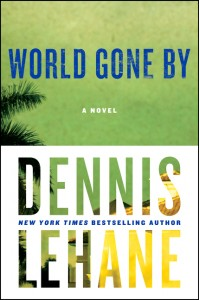
World Gone ByJoe Coughlin has been a retired mob boss for years now, but he still works on the fringes of the business by making money for the Bartolo crime family in Tampa, Florida.  Despite the fact that World War II is raging in Europe, Joe makes a lot of money for very important people, so he has no enemies, or so he thought.

When Joe hears a rumor that someone wants him dead, he has to find out who wants to kill him and why.  I would classify this book not only as historical fiction, but also as a mystery since most of the book is taken up with Joe trying to figure out who has ordered a hit on him.

Joe is the kind of character in a book that is morally ambiguous but whom you want to root for.  Even though he is involved in a dangerous, illegal business, he still thinks about what is right and wrong and goes to church on Sunday.  His relationship with his nine year old son is very touching.  Tomas is growing up without a mother and it is important to Joe that his son always feel loved, supported and never alone.

The plot of the book, which is filled with gangsters, shootouts, and witty dialogue, is fast paced and will be one that you read in a few days.  What struck me most about the characters in this book is that, although they want nothing more in life than money and power, it certainly doesn’t bring any of them happiness.  Every character in WORLD GONE BY has a sad story and a wretched life.

About The Author:
Dennis LehaneDennis Lehane is the author of ten previous novels—including the New York Times bestsellers Live by Night; Moonlight Mile; Gone, Baby, Gone; Mystic River; Shutter Island; and The Given Day—as well as Coronado, a collection of short stories and a play. He and his wife, Angie, currently live in California with their children.
Click on the TLC Tour banner below to see the full list of blogs participating in the tour.

tlc-logo-resized


2 Comments

Filed under Historical Fiction, Mystery/Thriller